When a Cake is More than a Cake.
April 2026, Captain Everett Landon
No one really knows the story of the cake or where it came from, but its place in life on Smith Island has always been there. Long before it was called anything special, it was just what people made, layer by layer. Passed down through families, set out at church dinners, taken along in a bail, and shared at gatherings, it likely came with the people, shaped over time by what they remembered, what they had, and how they lived.
The layers got thinner, the cakes got taller, and the ways of making them changed some, but no one felt the need to write it down. It wasn’t something set apart—it was just cake, and that’s what made it matter.
My thought on how we have the layer cake goes back further than that. We are descendants of immigrants from Cornwall, England, and we still have the dialect. In the winter of 2025 I met someone from England, and when I told her where we were from, she said she could hear it. That stuck with me. When people travel, they bring their culture and food with them—recipes, seeds, even sourdough starters passed down for generations. I believe we brought the layer cake with us. There are versions of it in Europe, so it’s not hard to think it came across the water just like we did.
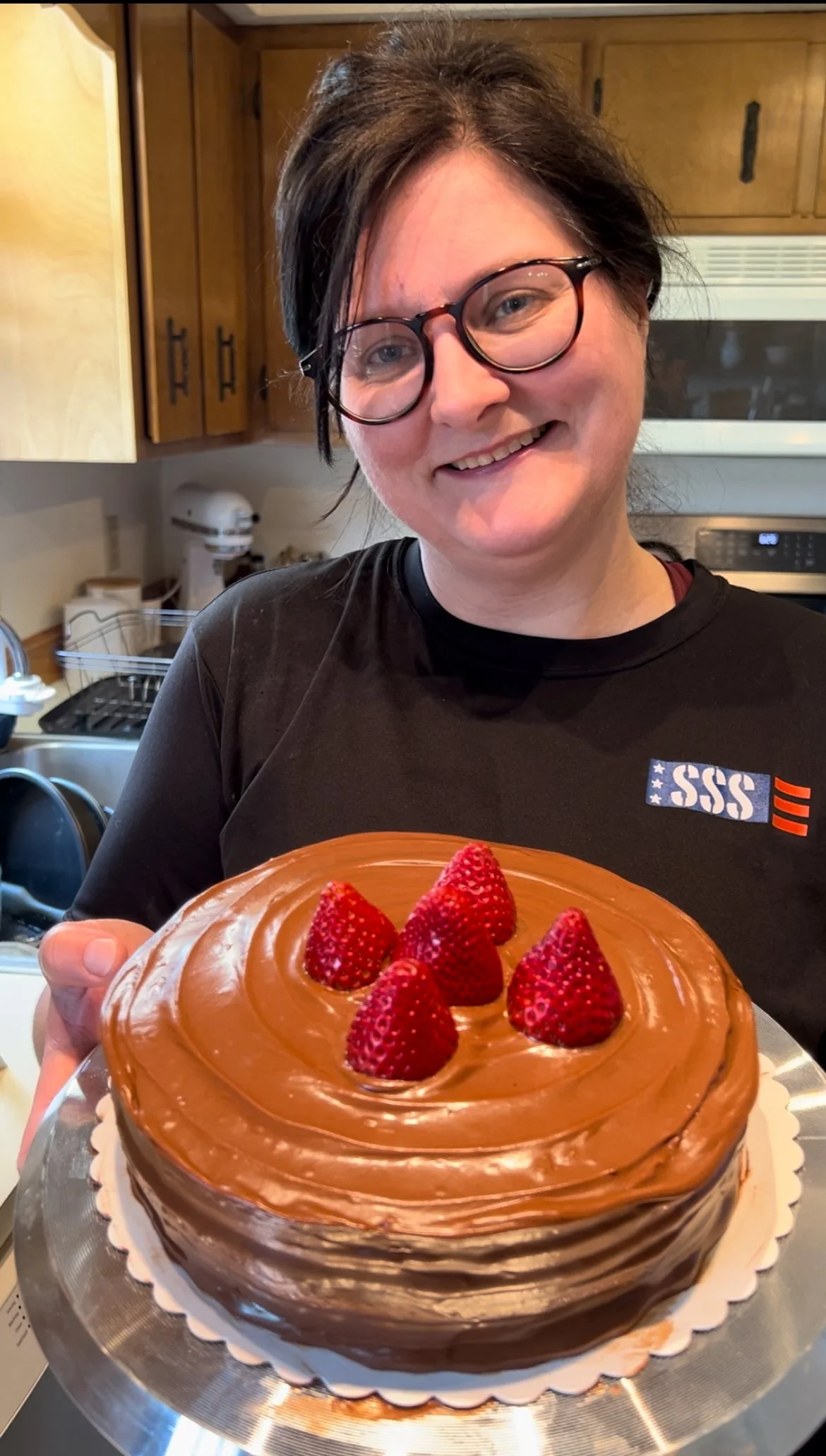
Carole Ann with her Smith Island cake.
There are also stories about the women baking cakes for their husbands to take on the boats. That part is true. The icing helped keep the cake fresh, and it would last. We once let a chocolate fudge cake sit in a cake box for two weeks just to see, and when we cut into it, it was still good. That chocolate fudge is the traditional cake.
But on the island, no one thought the cake was anything special. When church cookbooks were put together, the layer cake never made it in. Everybody already knew how to make it, there was no reason to write it down.
In my family, the recipes came through the women. Maxine learned from her mother Kathleen, who baked four-layer cakes at first. Over time, the layers got thinner and more of them, and that took some learning—thin layers burn easy. There were mistakes along the way. Some used scratch recipes, others used box mix when it came out. Preferences changed, but the cake stayed. My granddad would take slices with him in his lunch—what we called a “bail”—when he went out on the water.
Growing up, I never thought, “this Smith Island cake is good.” It was just what we had. I knew the difference, though. There was the layer cake, and then there was sheet cake. I didn’t like sheet cake much, and neither did my mom. When I went crabbing with my dad, I was always glad to find a slice of layer cake in my bail. Still, because we had it so often, other desserts felt like more of a treat—brownies, cookies, taffy, blueberry Danish, bread pudding. The layer cake was just part of everyday life.
It showed up at everything. Winter bingo games in Rhodes Point, where sweets were the prize. School Halloween socials with cake walks—numbers on the gym floor, music playing, and when it stopped, you hoped your number got called. If you had a choice, you picked the layer cake. Everybody did. Same at church dinners. The layer cakes went first.
My great-grandmother had a restaurant in her home, and even then, not every cake was homemade. Some came in on the freight boat. My mom made them for us and for company, usually on weekends. Later, she started selling them, around the early 2000s, when the cake began to get recognized beyond the island.
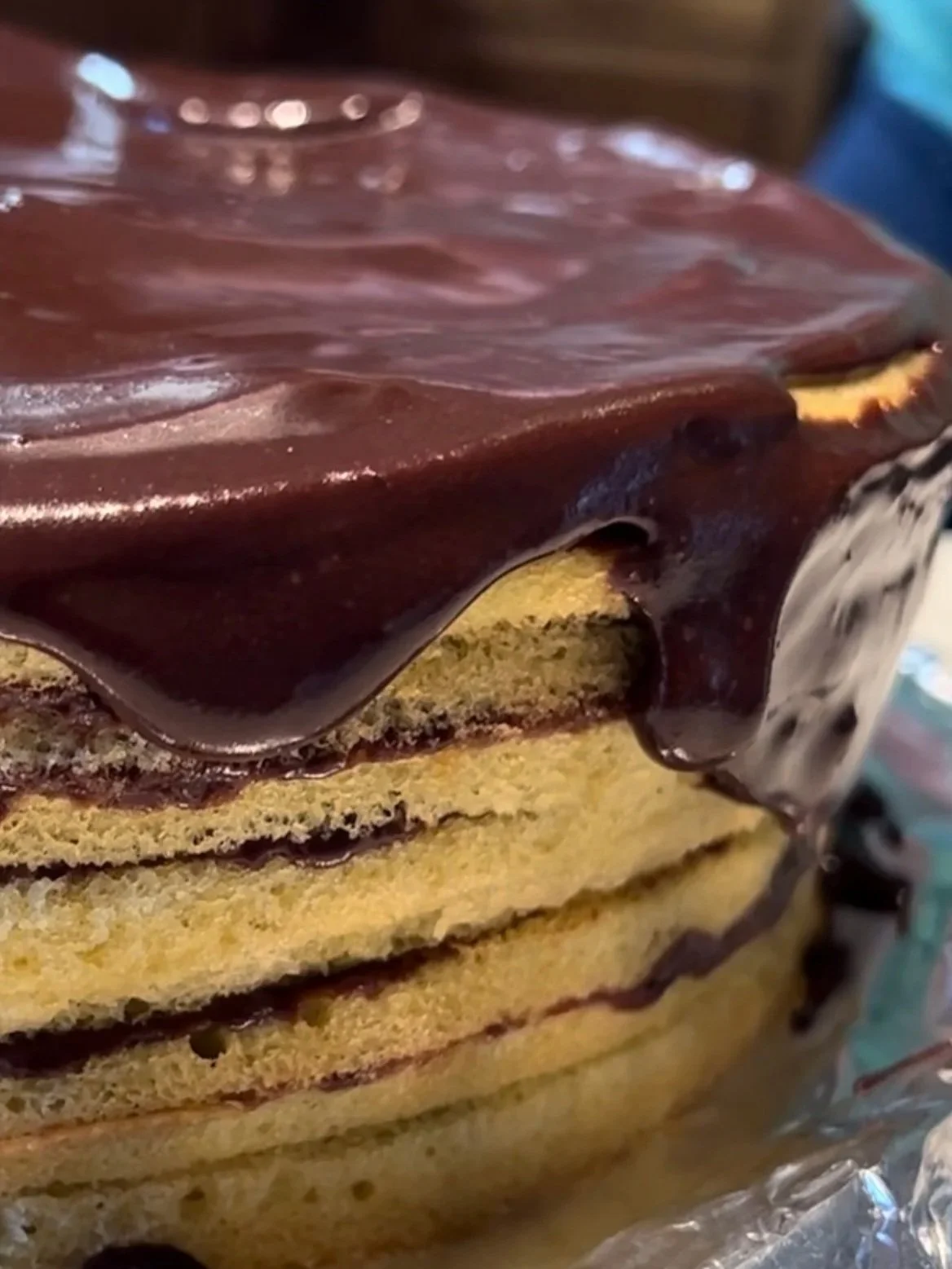
Now the cake is the state dessert, and people come looking for it. I do demonstrations because the cake is part of our history, part of our culture. The island itself will still be here, I believe that. What I worry about is the culture—the people, the stories, the way of life. That’s what could disappear.
Some folks say it’s not a Smith Island cake unless it’s made on Smith Island. I don’t see it that way. If someone like Carole Ann, who was born and raised here, makes her mother’s recipe somewhere else, that’s still a Smith Island cake. When we teach people how to make it, we’re not giving something away—we’re passing it on. If they go home, bake it, and share it, they’ll tell the story too.
That’s how it lasts. Not just as a cake, but as a piece of who we are.